Prompts for your own film
Use these recipes as starting points. Replace the cast, place, props and actions with your own. They are teaching prompts, not a promise to reproduce the edited film. Choose a duration supported by your model; if it cannot fit the action, split the sequence rather than rushing it.
Reference-image prompts
Character base
One photographic casting image of [person], wearing [outfit], against
neutral grey. Full body visible, relaxed hands and natural posture.
Ordinary skin transitions, credible ears and fingers, cloth creases
and directional window light. One person, one image, no labels.
Character views
Image1 is the identity authority. Show the SAME person in front,
three-quarter and closer face views on neutral grey. Preserve hair,
face, build and outfit. These are alternate views, not multiple people.
Matching prop states
Image1 supplies the object, camera, setting and light. Change only
[the precise state change]. Keep geometry and every unrelated detail
fixed. The result must show [the visible evidence of that change].
One book, the right page
Image1 supplies the physical book: binding, paper, proportions, camera
and light. Replace only the printed diagram with [hook and rope /
bridge plan / battery clamp]. Keep it flat black ink on paper. One
relevant diagram, no raised object and no unrelated instructions.
Reaction reference
Image1 supplies the person. Image2 supplies the place and light.
Show [person] looking [direction] at [off-screen subject], with
[restrained expression and posture]. Frame [camera height and crop].
Preserve identity and lighting; the eyeline must match the next shot.
Scene recipes
Attach the linked stills in the listed order. These prompts describe image-guided sequences. If you add a suitable action video, label its job separately: movement, framing and cut timing only. Do not use the assembled example film as though it were the original source for these generations.
Pit and cash escape
Suggested sequence length: 12 seconds. Review each action and cut in the generated result.
-
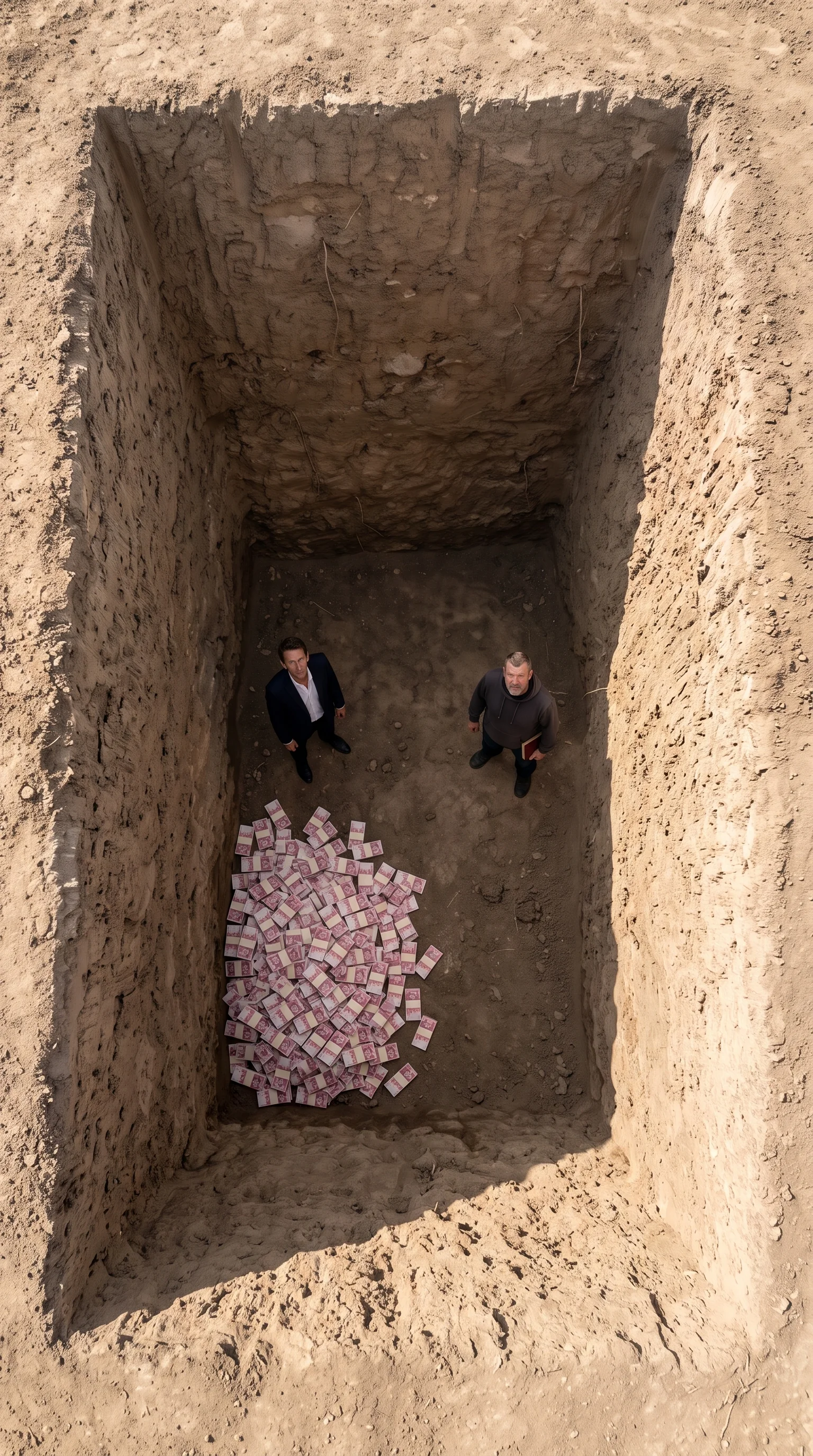
Pit: depth and geography — Deep pit geography and daylight. Recompose for each shot; do not duplicate the people visible here.
-
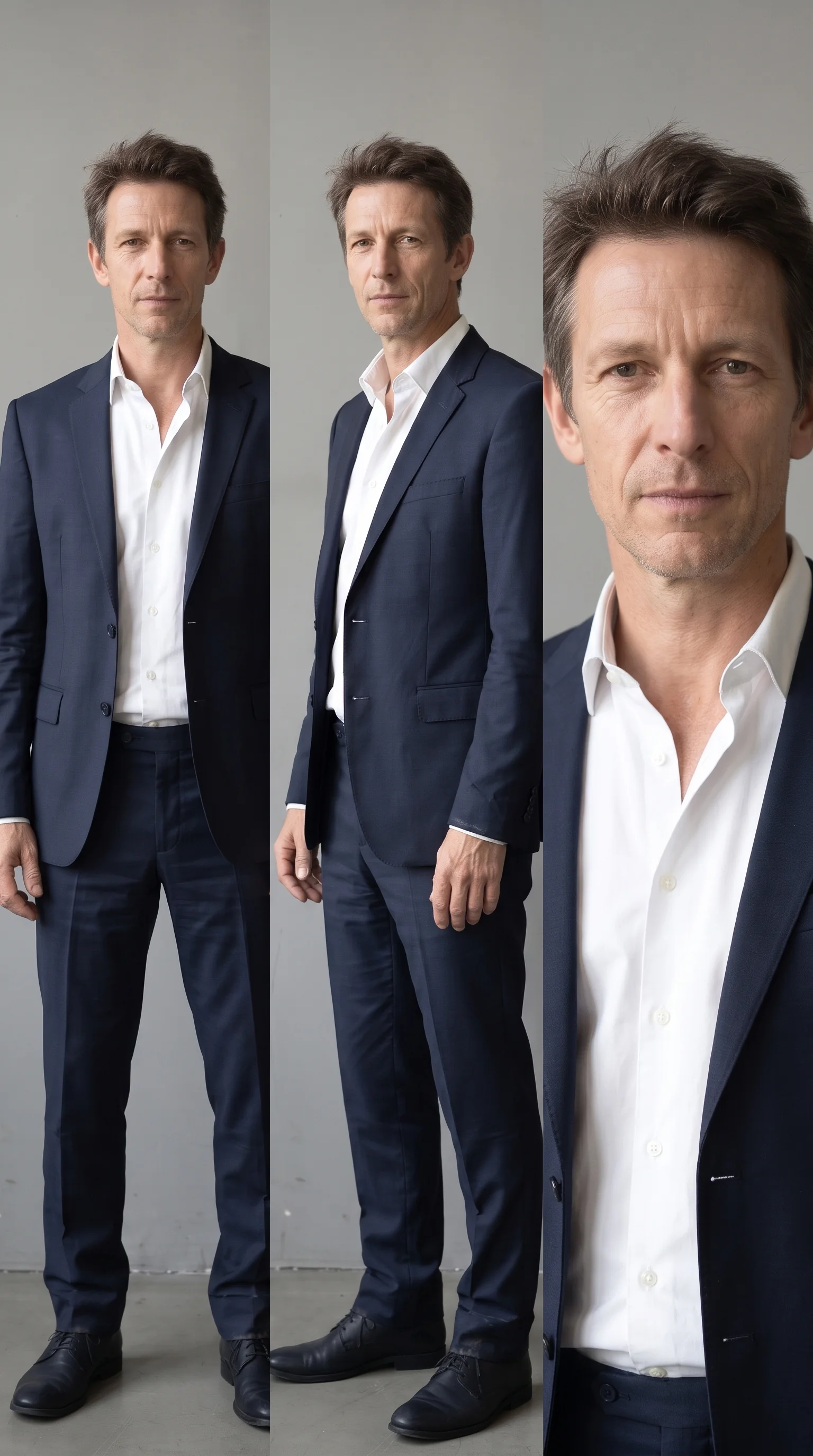
Suited character: identity views — Suited man identity and navy suit. Ignore the grey backdrop and sheet layout.
-
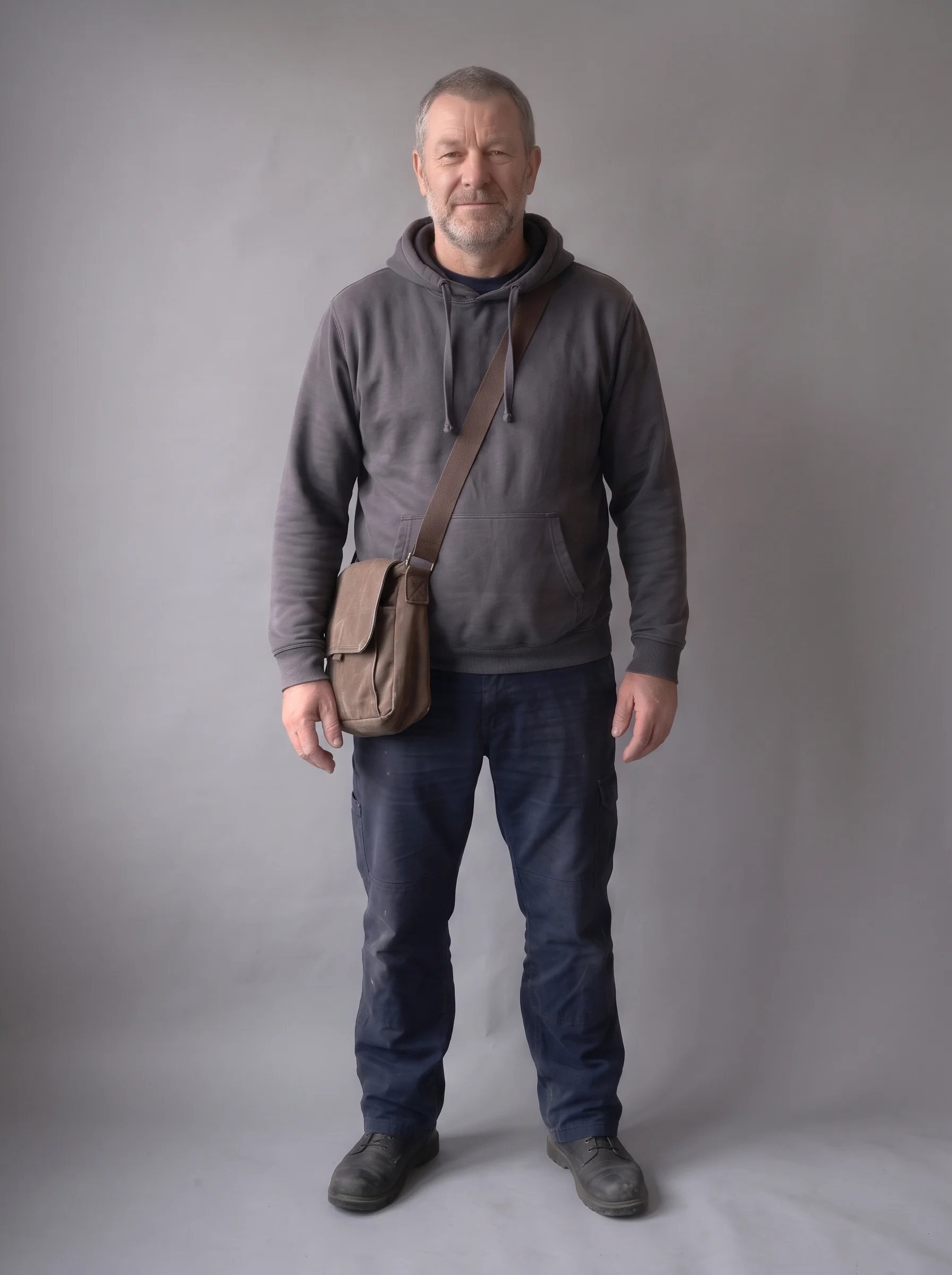
Reader: costume and satchel — Reader costume and satchel: left-shoulder strap, bag at right hip.
-
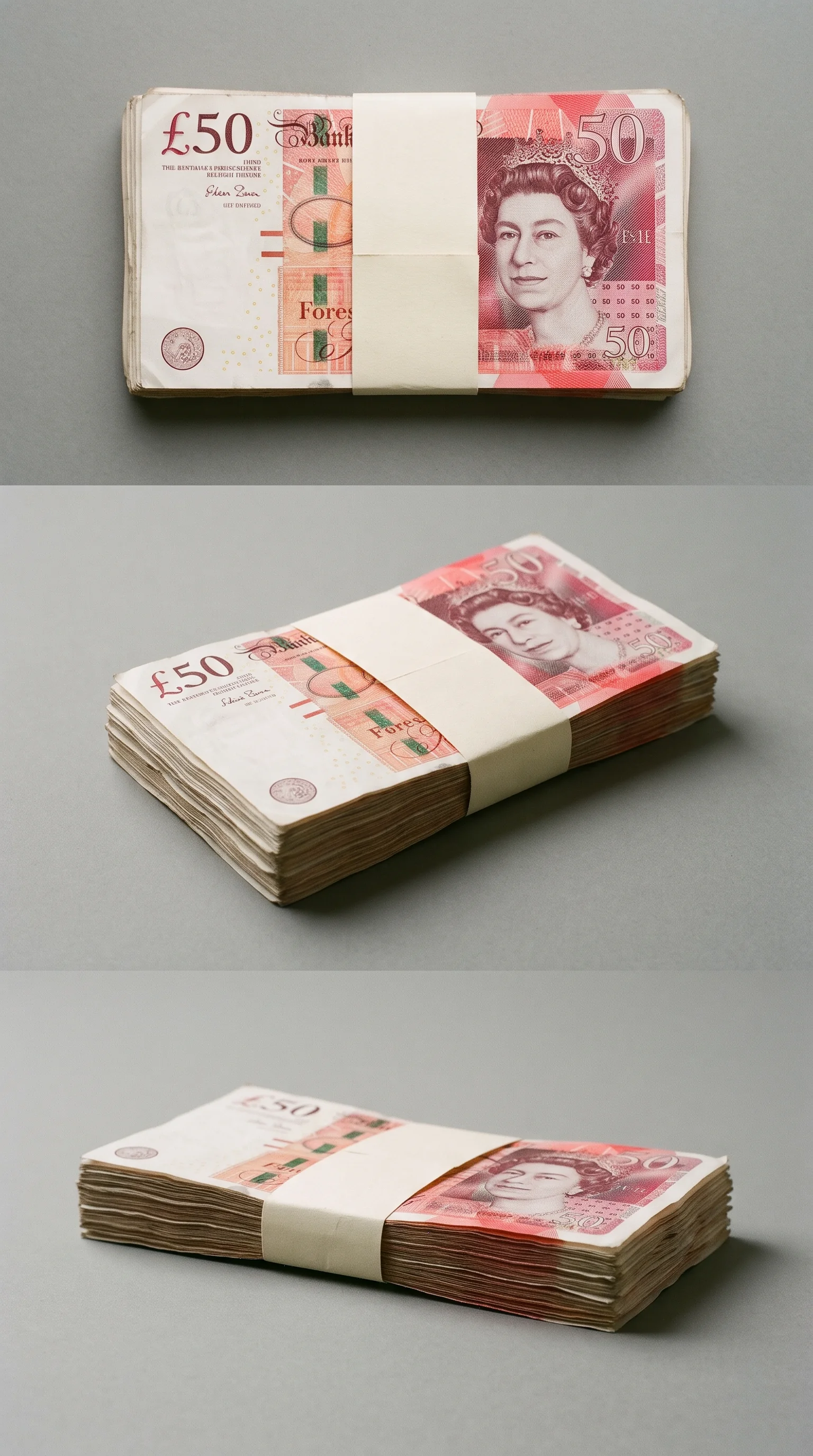
Cash: material and bundle scale — Ordinary hand-sized cash bundles and paper material.
An edited sequence, 12 seconds total, portrait 9:16. Direct cuts.
Photographic cast and materials. References guide the whole sequence.

REFERENCE ROLES
Image1: Deep pit geography and daylight. Recompose for each shot; do not duplicate the people visible here.
Image2: Suited man identity and navy suit. Ignore the grey backdrop and sheet layout.
Image3: Reader costume and satchel: left-shoulder strap, bag at right hip.
Image4: Ordinary hand-sized cash bundles and paper material.

CONTINUITY
Preserve the same cast, clothes, props, location and light at every cut.
The reader carries the book in his right-hip satchel during tool work.
Sunny, dry conditions. Real-time actions; cuts can skip elapsed work.

Shot 1, 0.0–1.7 seconds:
Two men stand far below in the deep isolated pit. Rich man on left beside a large supply of loose cash bundles; reader separate on right. No completed stairs yet.
Camera: Brief near-vertical overhead, rim and dry ground visible, distant floor establishes seven-metre depth. Wide downward framing establishes depth.
Sound: Sparse outdoor air.

Shot 2, 1.7–5.7 seconds:
Rich man opens tan money bag, lifts ordinary hand-sized pink-red banded bundles and places them onto supported stacks against wall. Active hands throughout. Cuts imply omitted construction time.
Camera: Close coverage of hands, bag and stacks. Human hands establish ordinary bundle scale; no enlarged banknotes.
Sound: Bag fabric, paper bundles landing.

Shot 3, 5.7–6.7 seconds:
One last cash bundle is pressed firmly onto a broad upper stair tread. Cash layers beneath it are solid and interlocked.
Camera: Side-on close detail on the upper tread. Show tread depth sufficient for a whole shoe.
Sound: Paper contact.

Shot 4, 6.7–12.0 seconds:
Rich man climbs last four cash treads, each planted foot supported by a solid cash step; plants both palms on rim and steps completely onto dry land with bag. Entire dense stair route continues below to pit floor; no jump over empty gap.
Camera: Camera is above the rim looking down onto his hands, feet and deep wall. Preserve the straight upper flight; do not redesign as a shallow pit. Finish on fully grounded man, facing pit.
Sound: Firm steps, fabric, hands contacting dry ground.

Sound belongs to the scene. No dialogue or independent score.
Keep the action literal. Verify support, contact, eyelines and light.
Book and rope escape
Suggested sequence length: 10 seconds. Review each action and cut in the generated result.
-
Reader: identity views — Reader identity, face, proportions and charcoal hoodie. Panels show one person; ignore the grey backdrop and layout.
-
Reader: costume and satchel — Reader costume and satchel: left-shoulder strap, bag at right hip.
-
Book: rope and hook — Burgundy book with a flat printed hook-and-rope diagram.
-
Hook: rooted anchor — Hook caught over a rooted anchor, rope descending under tension.
-
Pit: depth and geography — Deep pit geography and daylight. Recompose for each shot; do not duplicate the people visible here.
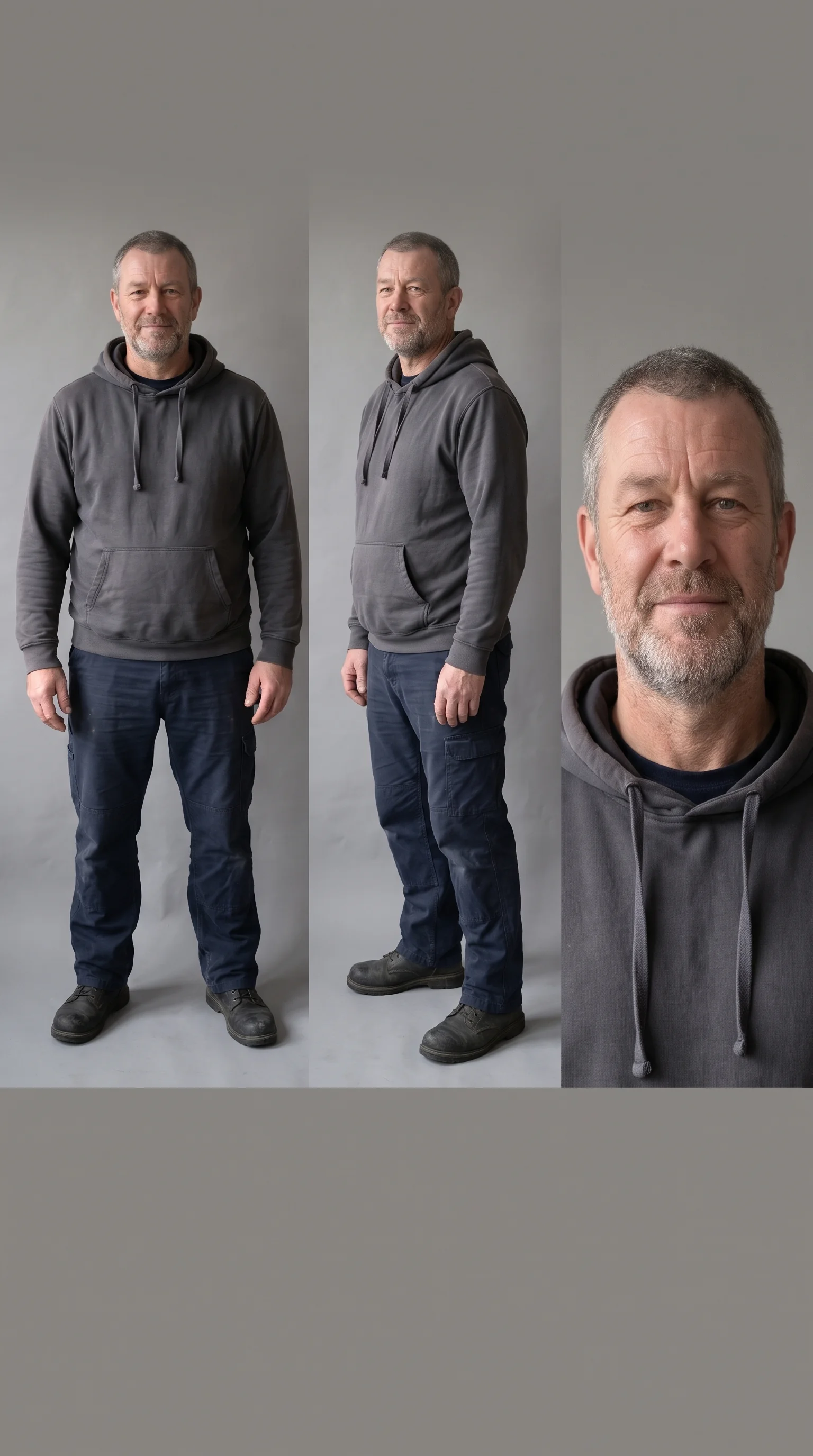
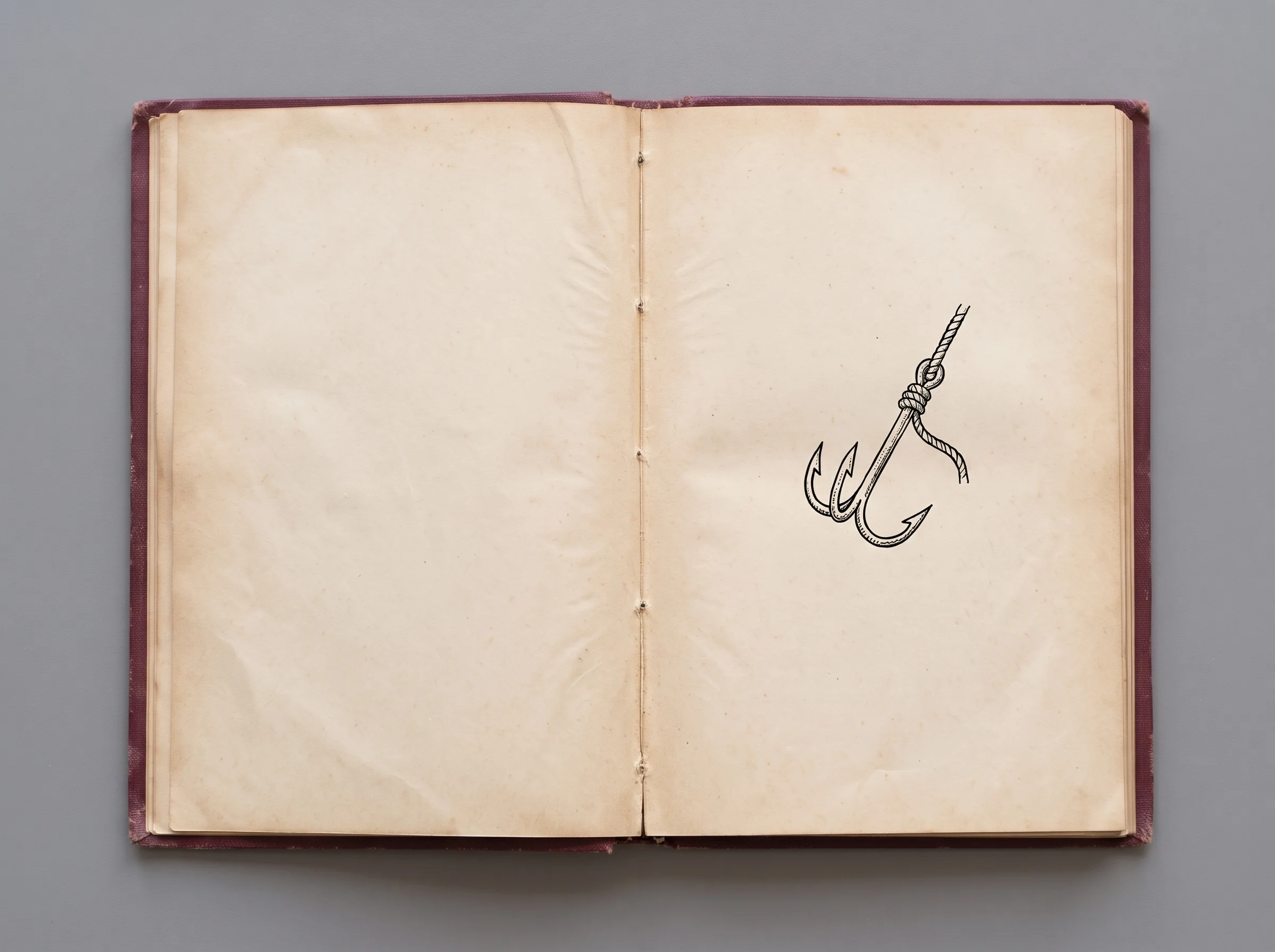
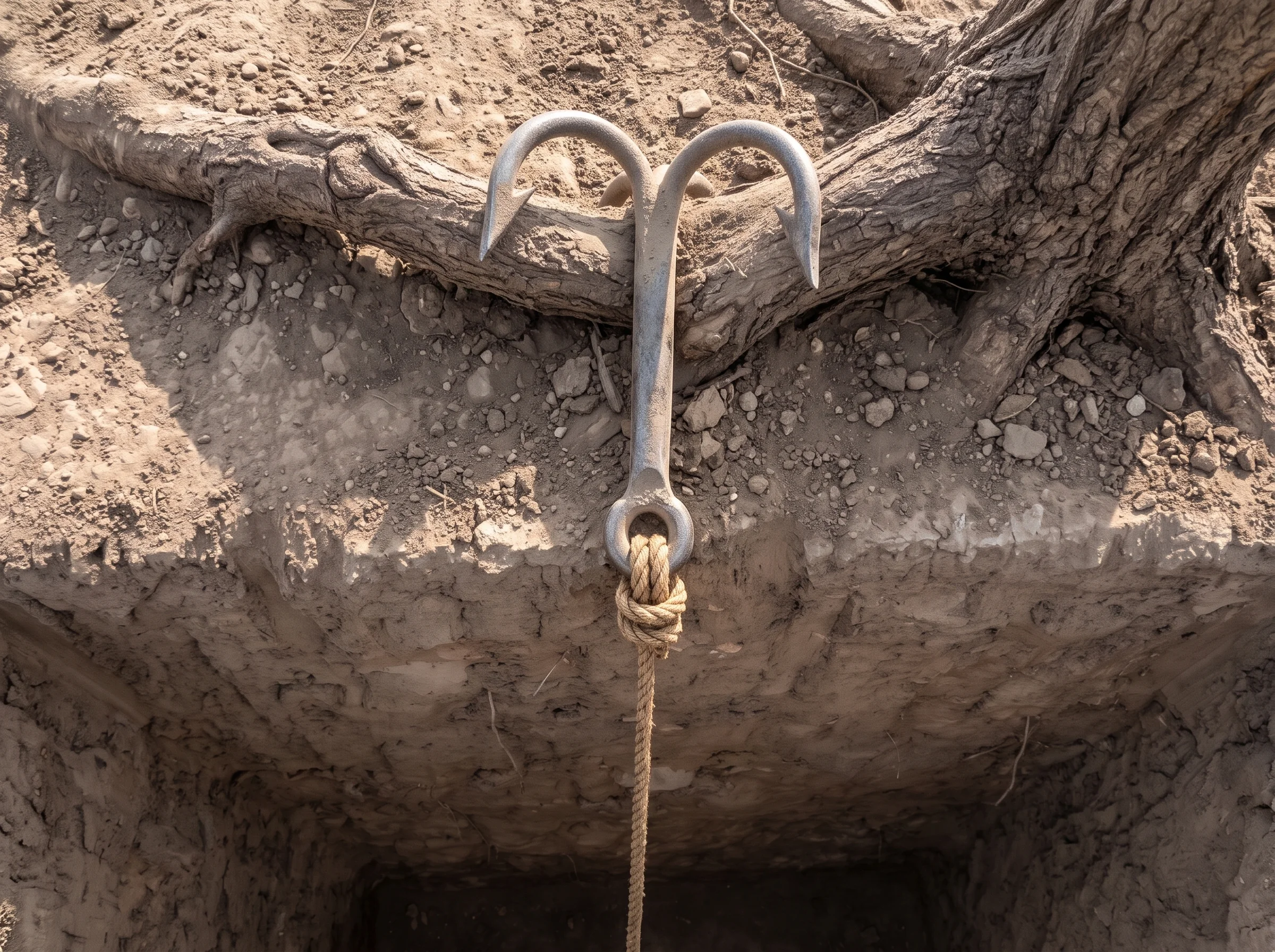
An edited sequence, 10 seconds total, portrait 9:16. Direct cuts.
Photographic cast and materials. References guide the whole sequence.

REFERENCE ROLES
Image1: Reader identity, face, proportions and charcoal hoodie. Panels show one person; ignore the grey backdrop and layout.
Image2: Reader costume and satchel: left-shoulder strap, bag at right hip.
Image3: Burgundy book with a flat printed hook-and-rope diagram.
Image4: Hook caught over a rooted anchor, rope descending under tension.
Image5: Deep pit geography and daylight. Recompose for each shot; do not duplicate the people visible here.

CONTINUITY
Preserve the same cast, clothes, props, location and light at every cut.
The reader carries the book in his right-hip satchel during tool work.
Sunny, dry conditions. Real-time actions; cuts can skip elapsed work.

Shot 1, 0.0–2.0 seconds:
Reader studies open manual showing only the hook-and-rope diagram from its photo, then lowers it toward satchel.
Camera: Near-frontal medium close; tilt to readable cream right page. Earth backdrop.
Sound: Page and cloth rustle.

Shot 2, 2.0–3.0 seconds:
His hands pull the existing rope knot tight through the eye of the steel hook.
Camera: Tight hands-and-hook detail.
Sound: Rope friction.

Shot 3, 3.0–4.9 seconds:
The thrown hook lands over the exposed sturdy root at the rim; rope drops taut into pit. Hook remains caught.
Camera: High downward rim insert excluding the horizon. Single hook only.
Sound: Dull metal contact, rope tension.

Shot 4, 4.9–6.6 seconds:
Reader pulls upward with two hands on the taut rope, boots braced against wall, satchel secured at right hip.
Camera: Tight side view on reader and wall, show effort and wall contact.
Sound: Breath, rope creak.

Shot 5, 6.6–7.1 seconds:
Hook stays securely wrapped over same rooted anchor under tension.
Camera: Brief downward anchor insert.
Sound: Rope tension continues.

Shot 6, 7.1–8.0 seconds:
One boot presses firmly into earthen wall as his body rises.
Camera: Close foot-contact insert.
Sound: Shoe scraping dry wall.

Shot 7, 8.0–10.0 seconds:
Reader grips rim with both palms, plants one knee, brings body onto solid dry ground. Rope and bag stay with him.
Camera: Above rim looks down. Edit skips earlier height, final movement begins already at rim.
Sound: Cloth and palms on earth.

Sound belongs to the scene. No dialogue or independent score.
Keep the action literal. Verify support, contact, eyelines and light.
Cash bridge and reactions
Suggested sequence length: 12 seconds. Review each action and cut in the generated result.
-
Suited character: identity views — Suited man identity and navy suit. Ignore the grey backdrop and sheet layout.
-
Reader: identity views — Reader identity, face, proportions and charcoal hoodie. Panels show one person; ignore the grey backdrop and layout.
-
Reader: costume and satchel — Reader costume and satchel: left-shoulder strap, bag at right hip.
-
Gorge: location — Gorge geography, two ledges and river below. Keep crossing endpoints fixed.
-
Cash: material and bundle scale — Ordinary hand-sized cash bundles and paper material.
-
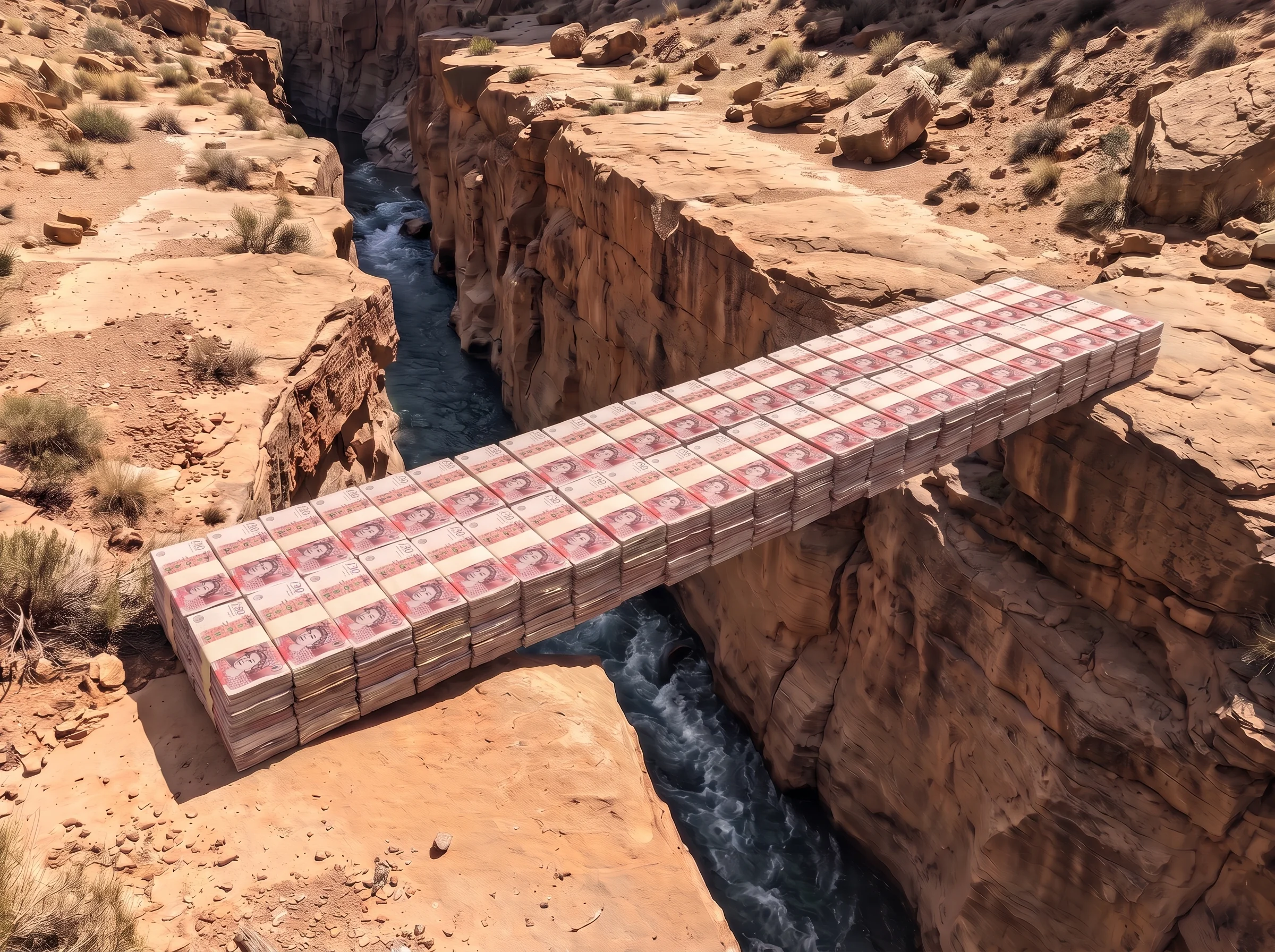
Cash bridge: crossing geometry — One cash bridge with the same endpoints and solid deck in every view.
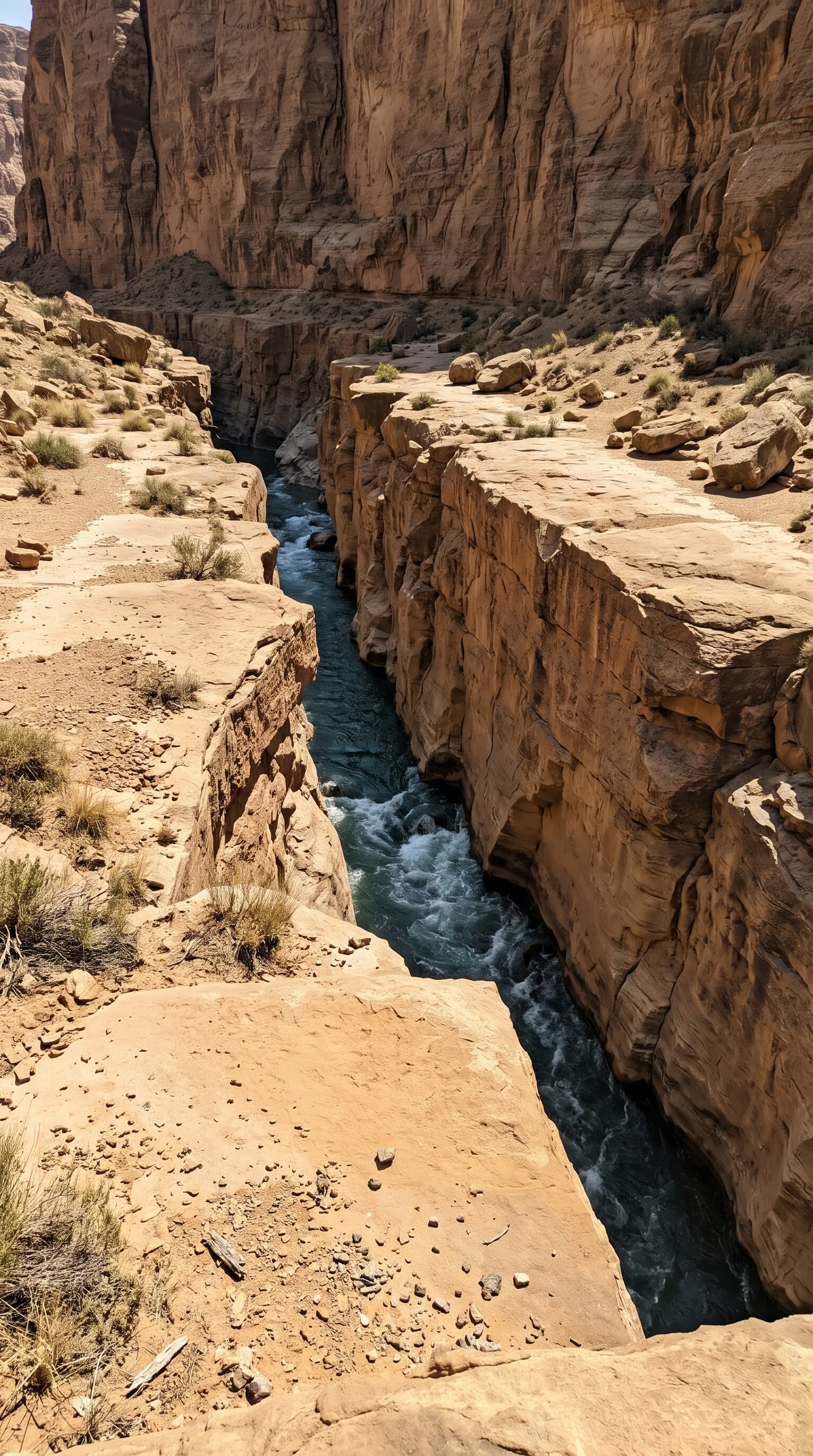
An edited sequence, 12 seconds total, portrait 9:16. Direct cuts.
Photographic cast and materials. References guide the whole sequence.

REFERENCE ROLES
Image1: Suited man identity and navy suit. Ignore the grey backdrop and sheet layout.
Image2: Reader identity, face, proportions and charcoal hoodie. Panels show one person; ignore the grey backdrop and layout.
Image3: Reader costume and satchel: left-shoulder strap, bag at right hip.
Image4: Gorge geography, two ledges and river below. Keep crossing endpoints fixed.
Image5: Ordinary hand-sized cash bundles and paper material.
Image6: One cash bridge with the same endpoints and solid deck in every view.

CONTINUITY
Preserve the same cast, clothes, props, location and light at every cut.
The reader carries the book in his right-hip satchel during tool work.
Sunny, dry conditions. Real-time actions; cuts can skip elapsed work.

Shot 1, 0.0–1.9 seconds:
Both men arrive on near ledge and stop safely before the gap. Rich man leads, reader behind.
Camera: High rear three-quarter view over the near ledge, rapids far below.
Sound: Footsteps and river.

Shot 2, 1.9–3.2 seconds:
Rich man opens tan bag and lifts several ordinary cash bundles. Reader watches in background.
Camera: Waist-level medium close angled downward.
Sound: Bag and paper.

Shot 3, 3.2–4.3 seconds:
He places a bundle onto the near end of an aligned interlocked cash course.
Camera: Close hands and cash, fixed ledge.
Sound: Paper placement.

Shot 4, 4.3–5.9 seconds:
Completed cash bridge spans the exact same gap, both ends resting on stone. Cash-only thick deck matches image.
Camera: Wide high three-quarter bridge reveal, same endpoints as preceding shot.
Sound: Rapids.

Shot 5, 5.9–9.3 seconds:
Rich man walks the last portion across cash deck, feet supported on every step, reaches far ledge with tan bag. Reader stays on near ledge.
Camera: Side track along feet and lower body; no horizon.
Sound: Firm shoes and river.

Shot 6, 9.3–10.9 seconds:
Safely on far ledge, rich man stops, turns his head back toward reader across gap, lifts chin and gives a small dismissive smile.
Camera: Medium close at downward three-quarter angle; stone and river backdrop. Clear superiority without extra gestures.
Sound: River and clothing.

Shot 7, 10.9–12.0 seconds:
Reader on near ledge meets the look, then lowers eyes toward the manual he is opening.
Camera: Reverse medium close, same eyeline across gap; cut next to bridge diagram.
Sound: First page rustle.

Sound belongs to the scene. No dialogue or independent score.
Keep the action literal. Verify support, contact, eyelines and light.
Wooden bridge
Suggested sequence length: 8 seconds. Review each action and cut in the generated result.
-
Reader: identity views — Reader identity, face, proportions and charcoal hoodie. Panels show one person; ignore the grey backdrop and layout.
-
Reader: costume and satchel — Reader costume and satchel: left-shoulder strap, bag at right hip.
-
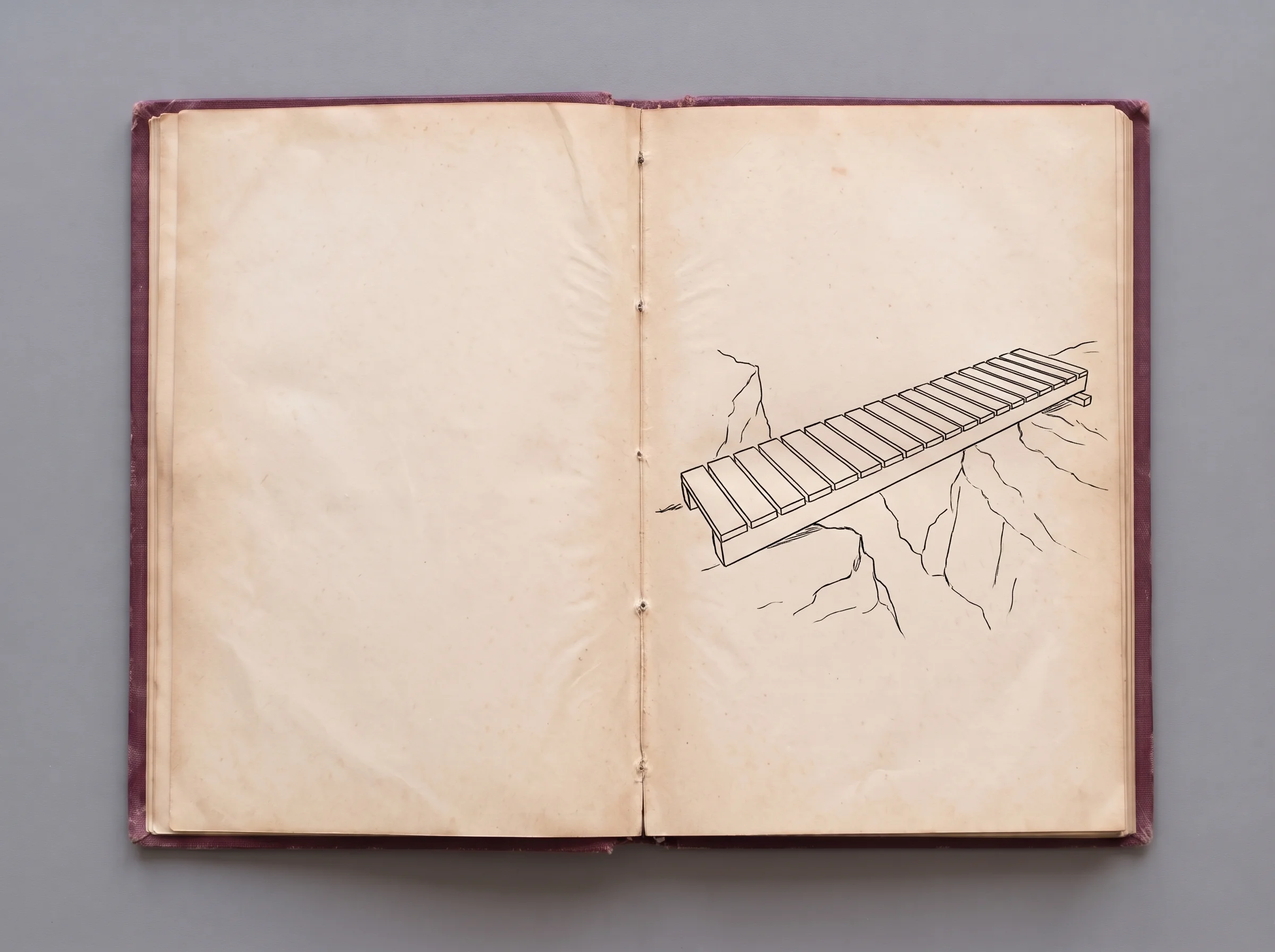
Book: timber bridge — The same book with a flat printed timber-bridge diagram.
-
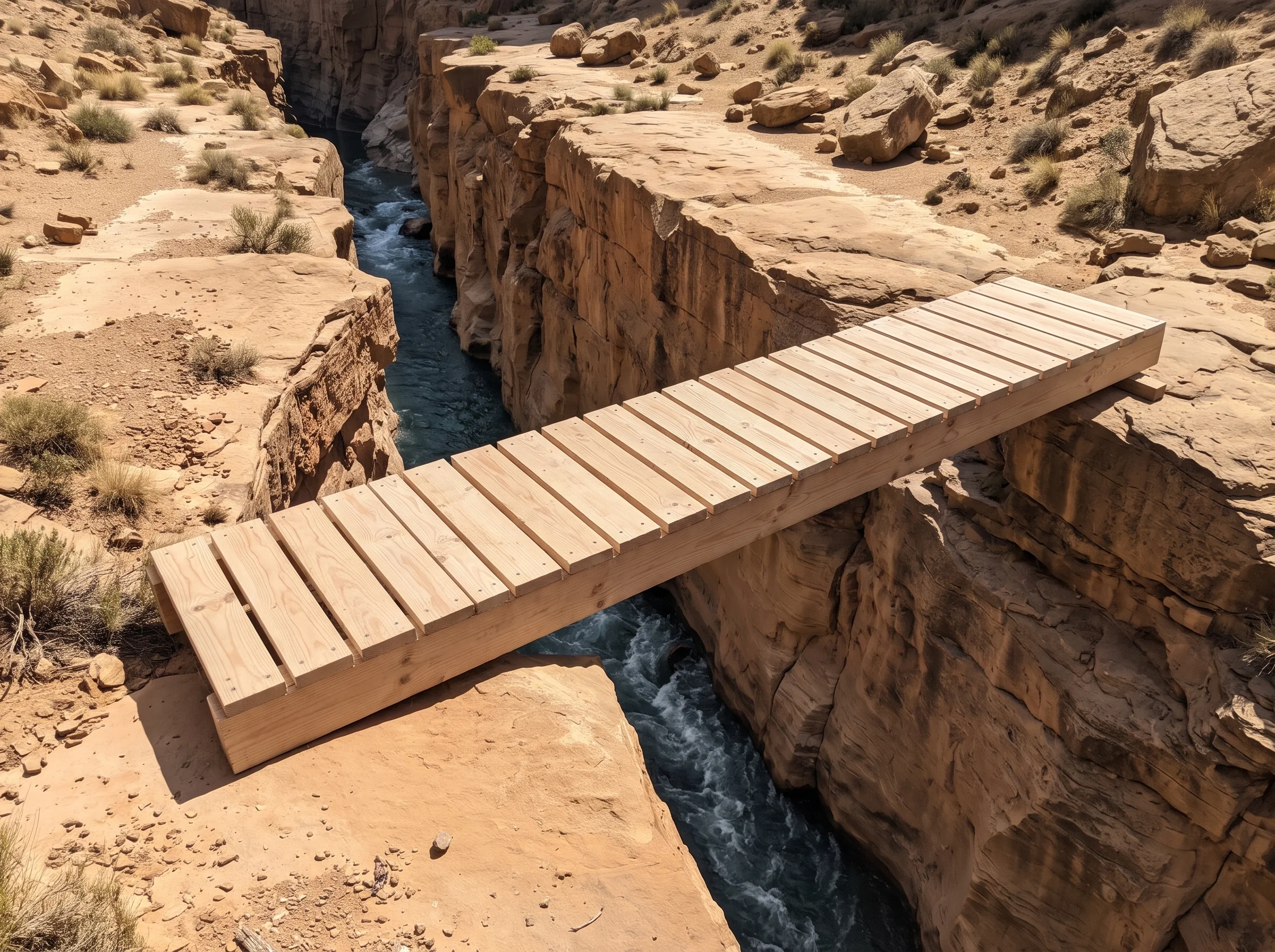
Timber bridge: crossing geometry — One timber bridge with both support ends on the ledges; match visible geometry.
-
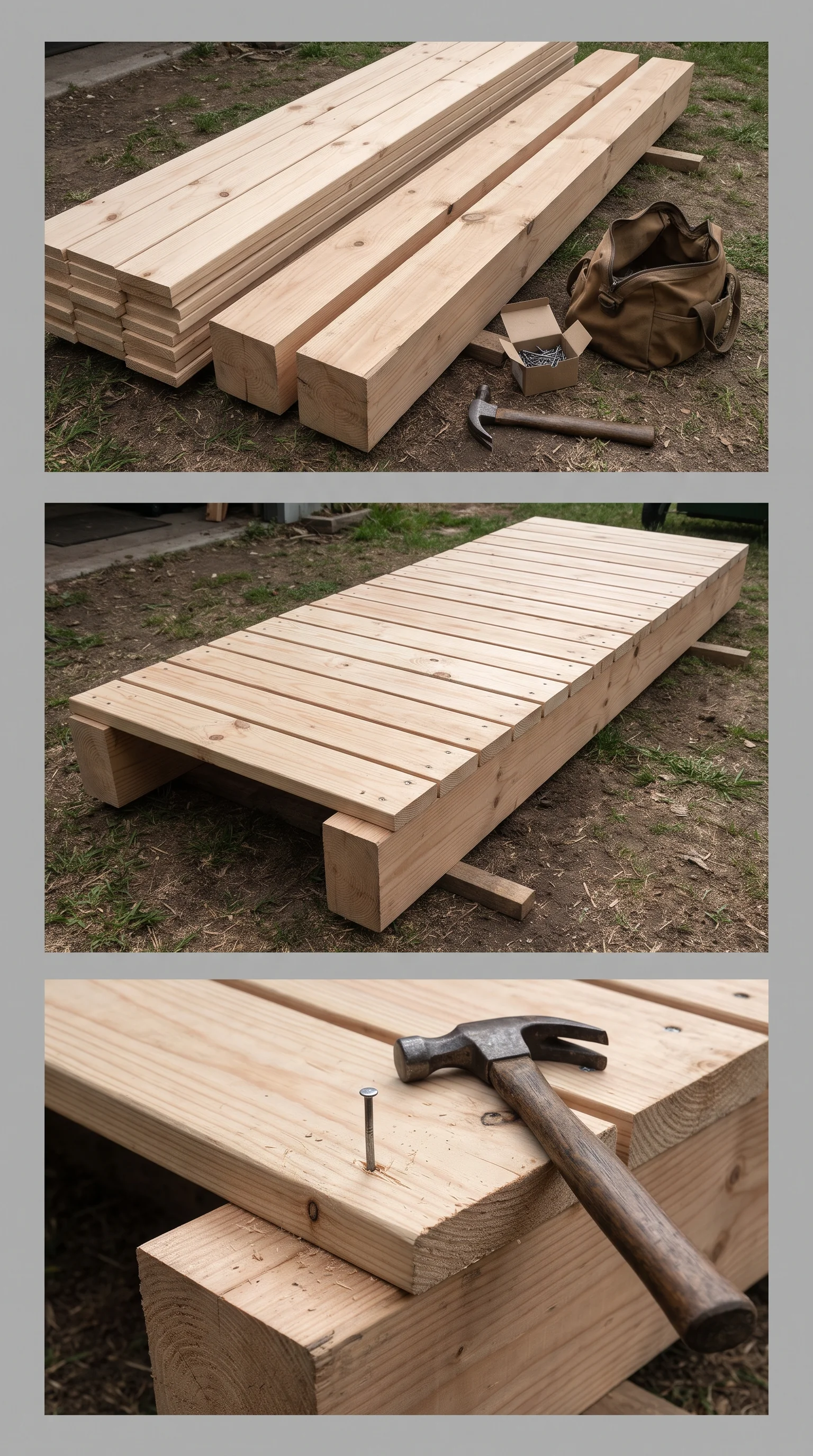
Timber and tools — Consistent timber and tools; transfer only the objects needed in the shot.
An edited sequence, 8 seconds total, portrait 9:16. Direct cuts.
Photographic cast and materials. References guide the whole sequence.

REFERENCE ROLES
Image1: Reader identity, face, proportions and charcoal hoodie. Panels show one person; ignore the grey backdrop and layout.
Image2: Reader costume and satchel: left-shoulder strap, bag at right hip.
Image3: The same book with a flat printed timber-bridge diagram.
Image4: One timber bridge with both support ends on the ledges; match visible geometry.
Image5: Consistent timber and tools; transfer only the objects needed in the shot.

CONTINUITY
Preserve the same cast, clothes, props, location and light at every cut.
The reader carries the book in his right-hip satchel during tool work.
Sunny, dry conditions. Real-time actions; cuts can skip elapsed work.

Shot 1, 0.0–1.6 seconds:
Reader studies cream page with timber bridge diagram only, then closes manual.
Camera: Tight book and reader; diagram matches supplied image, not hook.
Sound: Page rustle.

Shot 2, 1.6–2.4 seconds:
Reader sets one short cross slat onto two already positioned support beams.
Camera: Tight downward hands and board detail.
Sound: Wood contact.

Shot 3, 2.4–3.2 seconds:
A single hammer stroke drives one nail through slat into beam. Only reader hands appear.
Camera: Tight nail-and-hammer detail, no other person.
Sound: One clean hammer strike.

Shot 4, 3.2–4.3 seconds:
Finished wooden bridge spans same gorge with both beam ends resting on ledges. Regular narrow slat gaps.
Camera: High three-quarter completed-deck reveal.
Sound: River ambience.

Shot 5, 4.3–8.0 seconds:
Reader crosses final stretch of completed bridge and steps onto far stone ledge, satchel at right hip. Each shoe lands on solid slat or stone.
Camera: Brisk side track with torso and feet, angled down.
Sound: Wood footsteps then stone.

Sound belongs to the scene. No dialogue or independent score.
Keep the action literal. Verify support, contact, eyelines and light.
Boat inspection and walk-away
Suggested sequence length: 6 seconds. Review each action and cut in the generated result.
-
Suited character: identity views — Suited man identity and navy suit. Ignore the grey backdrop and sheet layout.
-
Reader: costume and satchel — Reader costume and satchel: left-shoulder strap, bag at right hip.
-
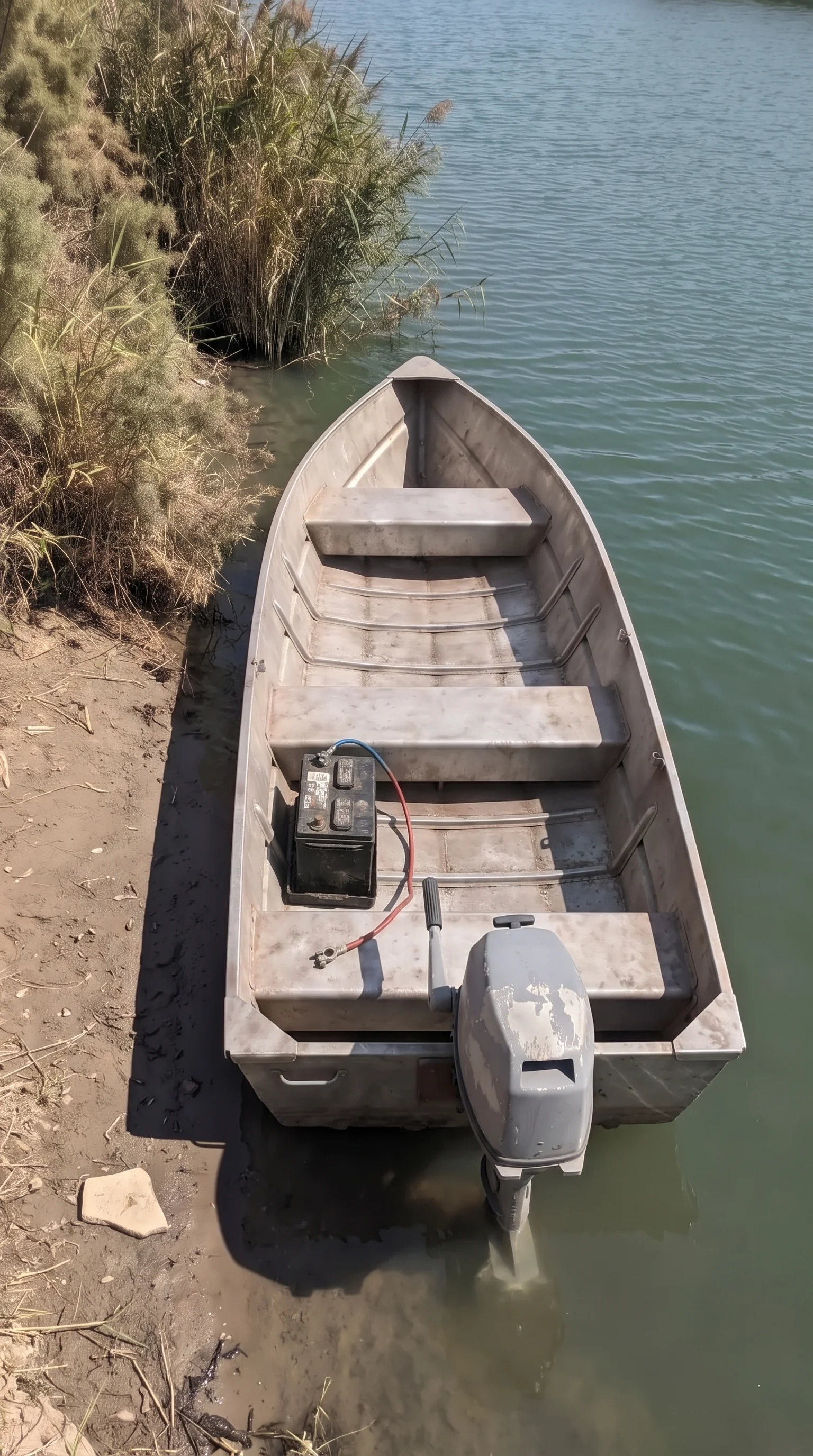
Boat: shoreline master — Boat master: three benches, covered grey motor, battery location, land left, water right, bow upframe.
-
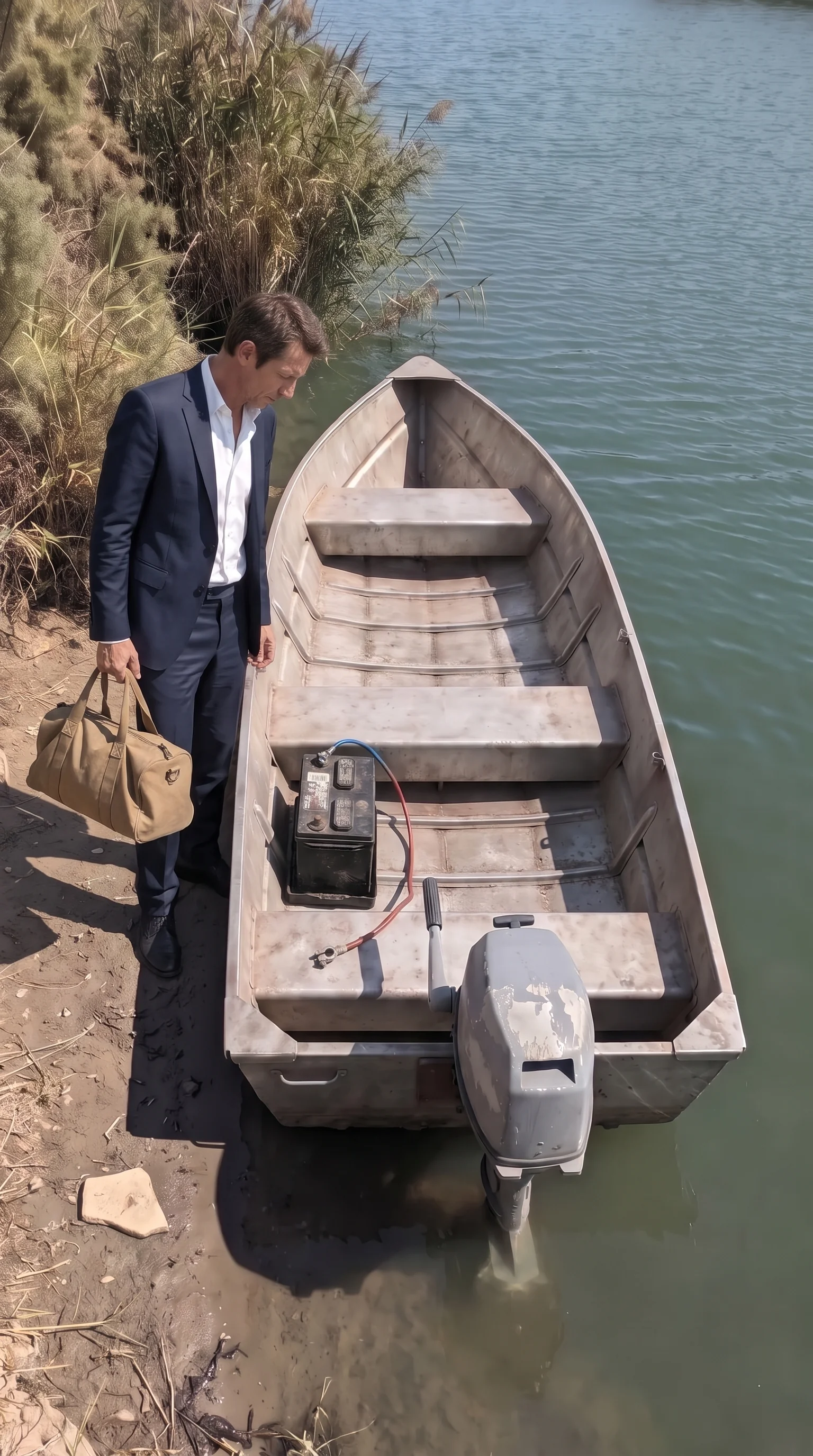
Boat: inspection — Suited man on dry bank beside the stationary boat.
-
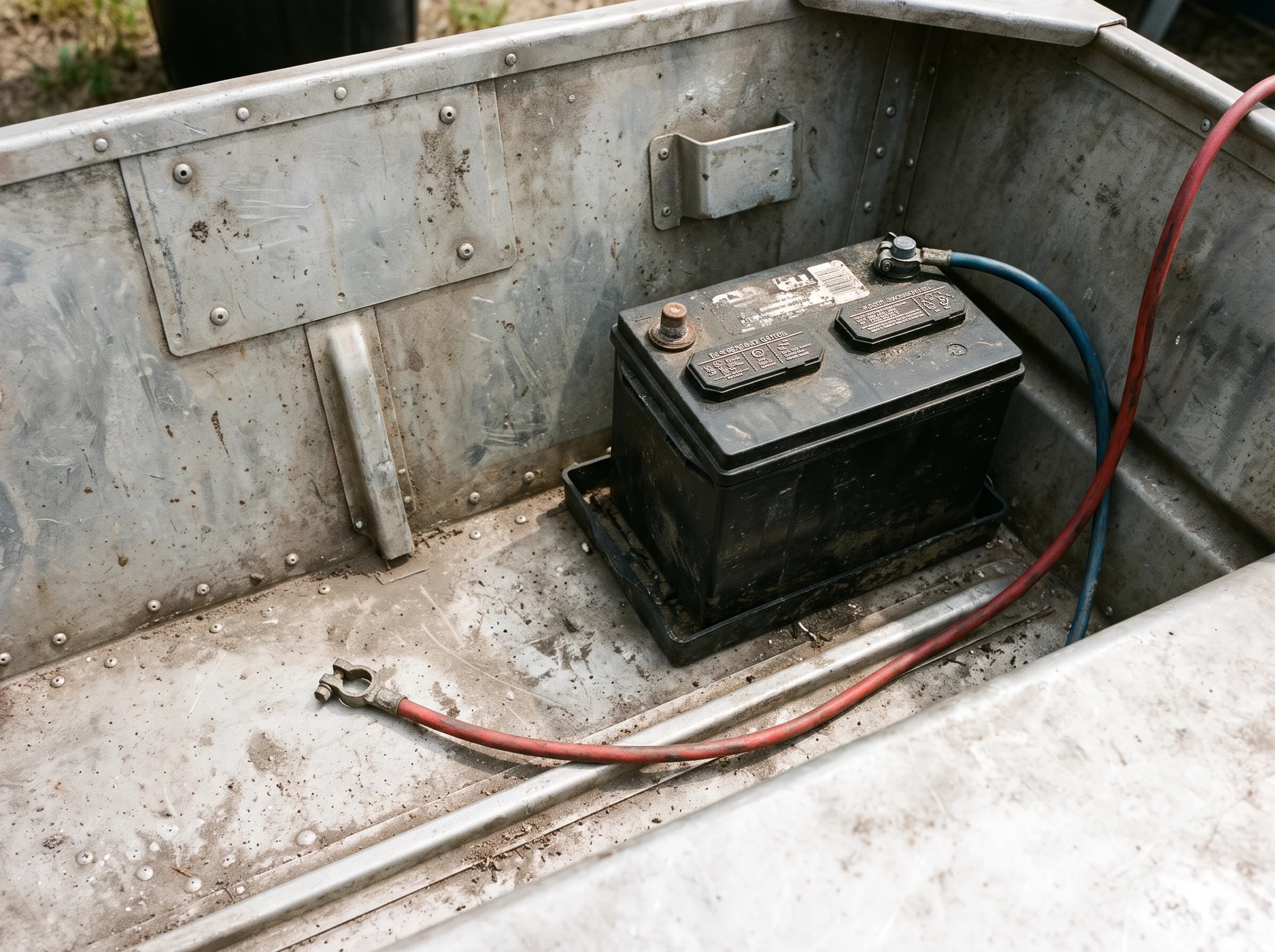
Battery: loose clamp — Battery starting state: bare post, detached red clamp; blue lead attached.
An edited sequence, 6 seconds total, portrait 9:16. Direct cuts.
Photographic cast and materials. References guide the whole sequence.

REFERENCE ROLES
Image1: Suited man identity and navy suit. Ignore the grey backdrop and sheet layout.
Image2: Reader costume and satchel: left-shoulder strap, bag at right hip.
Image3: Boat master: three benches, covered grey motor, battery location, land left, water right, bow upframe.
Image4: Suited man on dry bank beside the stationary boat.
Image5: Battery starting state: bare post, detached red clamp; blue lead attached.

CONTINUITY
Preserve the same cast, clothes, props, location and light at every cut.
The reader carries the book in his right-hip satchel during tool work.
Sunny, dry conditions. Real-time actions; cuts can skip elapsed work.

Shot 1, 0.0–1.6 seconds:
Rich man stands on dry bank at left of stationary dinghy, tan bag in hand. He looks into hull at dead battery; reader is further back on land.
Camera: Elevated three-quarter shore composition matching photo, boat right and land left.
Sound: Water lapping.

Shot 2, 1.6–2.4 seconds:
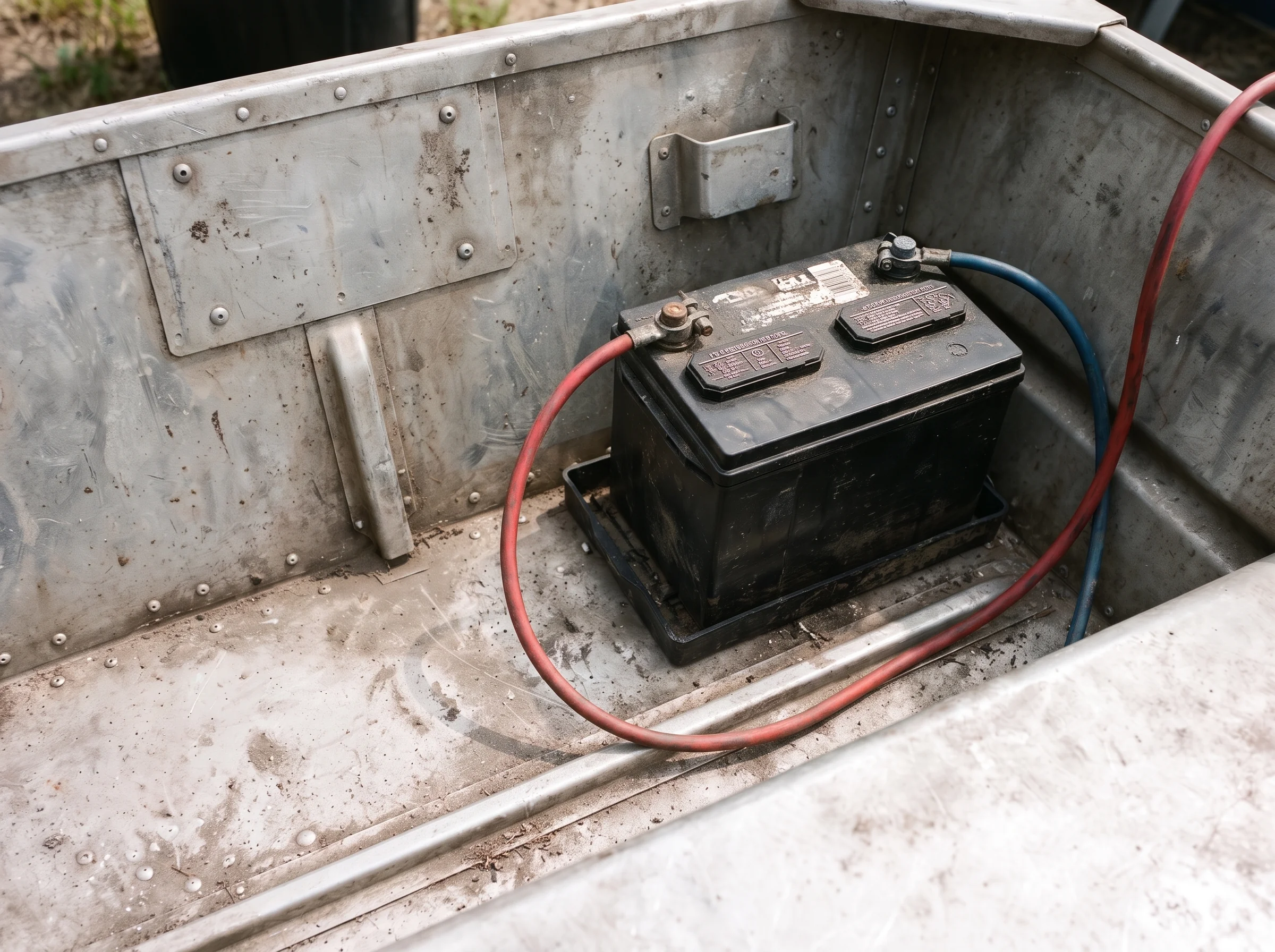
Show black battery with bare positive post and one loose red clamp lying beside it. Blue cable remains attached.
Camera: Downward battery insert. This is the fault, not an exposed engine.
Sound: Water and cable touch.

Shot 3, 2.4–3.6 seconds:
Rich man straightens, gives a dismissive half-smile toward reader, turns shoulders left toward inland path.
Camera: High medium view, boat remains behind him on right.
Sound: Fabric and small dismissive breath.

Shot 4, 3.6–6.0 seconds:
Rich man walks three steps farther left onto dry inland path, moving visibly away from river and boat. Reader stays beside boat looking at it. Boat does not move.
Camera: Elevated stationary wide, retain water at right and dry inland path at left for unambiguous direction.
Sound: Dry footsteps recede, water remains.

Sound belongs to the scene. No dialogue or independent score.
Keep the action literal. Verify support, contact, eyelines and light.
Repair, boarding and departure
Suggested sequence length: 12 seconds. Review each action and cut in the generated result.
-
Reader: identity views — Reader identity, face, proportions and charcoal hoodie. Panels show one person; ignore the grey backdrop and layout.
-
Reader: costume and satchel — Reader costume and satchel: left-shoulder strap, bag at right hip.
-
Boat: shoreline master — Boat master: three benches, covered grey motor, battery location, land left, water right, bow upframe.
-
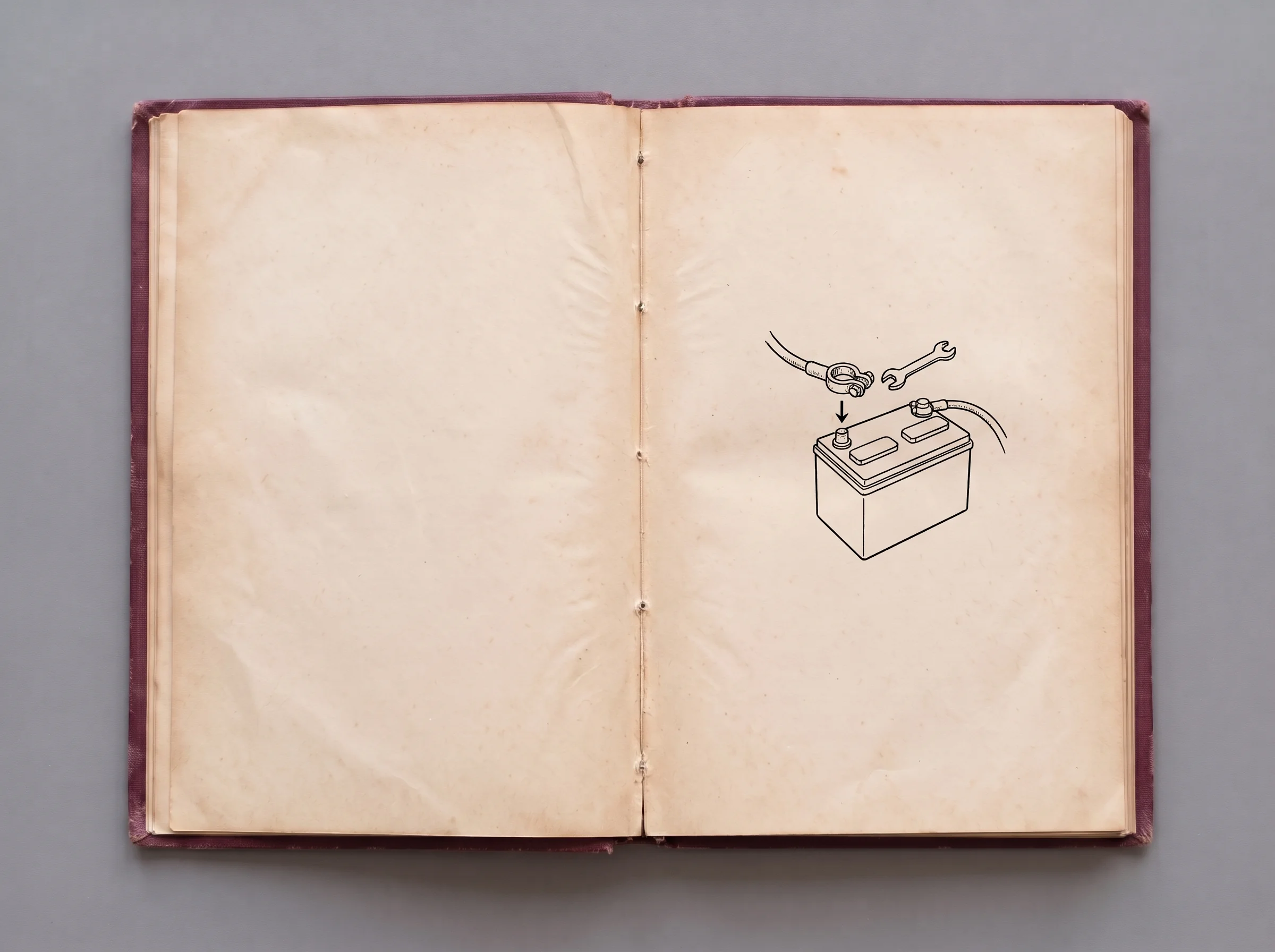
Book: battery clamp — The same book with a flat printed battery-clamp diagram.
-
Battery: loose clamp — Battery starting state: bare post, detached red clamp; blue lead attached.
-
Battery: connected clamp — Battery ending state: red clamp seated on post; all other details unchanged.
-
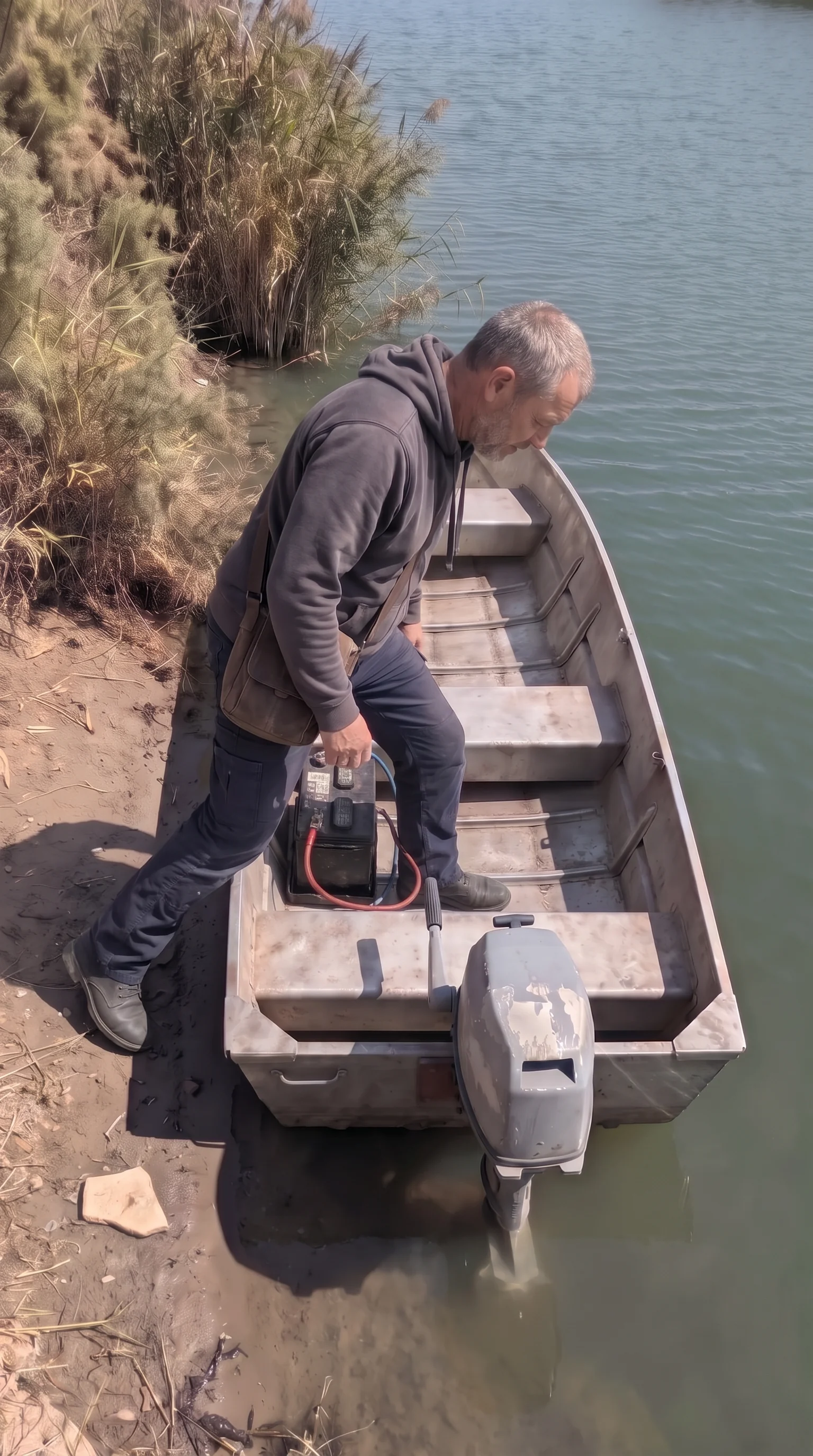
Boat: boarding direction — Boarding direction and foot placement. Specify hand support in motion; this still does not prove contact.
-
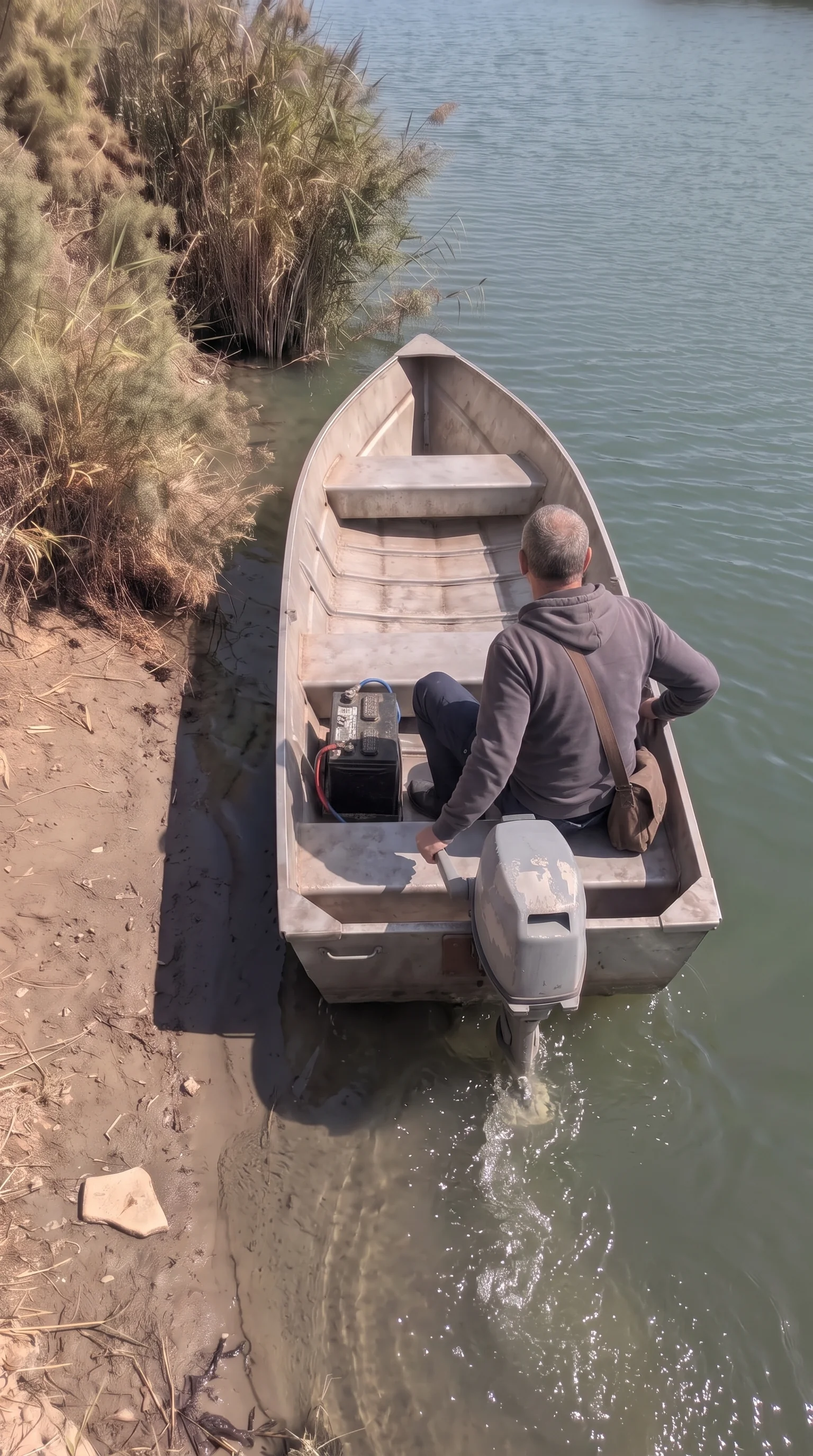
Boat: seated departure — Seated driver on stern bench, facing forward, same hull and covered motor.
An edited sequence, 12 seconds total, portrait 9:16. Direct cuts.
Photographic cast and materials. References guide the whole sequence.

REFERENCE ROLES
Image1: Reader identity, face, proportions and charcoal hoodie. Panels show one person; ignore the grey backdrop and layout.
Image2: Reader costume and satchel: left-shoulder strap, bag at right hip.
Image3: Boat master: three benches, covered grey motor, battery location, land left, water right, bow upframe.
Image4: The same book with a flat printed battery-clamp diagram.
Image5: Battery starting state: bare post, detached red clamp; blue lead attached.
Image6: Battery ending state: red clamp seated on post; all other details unchanged.
Image7: Boarding direction and foot placement. Specify hand support in motion; this still does not prove contact.
Image8: Seated driver on stern bench, facing forward, same hull and covered motor.

CONTINUITY
Preserve the same cast, clothes, props, location and light at every cut.
The reader carries the book in his right-hip satchel during tool work.
Sunny, dry conditions. Real-time actions; cuts can skip elapsed work.

Shot 1, 0.0–1.7 seconds:
Reader beside boat studies manual page showing battery, clamp arrow and wrench, then stows book in right-hip satchel.
Camera: Medium close downward to readable diagram, river bank behind.
Sound: Pages and cloth.

Shot 2, 1.7–2.7 seconds:
Bare positive battery post and detached red clamp seen together; blue lead already attached.
Camera: Match loose battery photo closeup, battery remains on port floor.
Sound: Water lapping.

Shot 3, 2.7–4.5 seconds:
Reader hand lifts single red clamp onto bare post and presses it fully down. Blue lead does not move.
Camera: Fixed close detail showing contact.
Sound: Small metal contact.

Shot 4, 4.5–5.7 seconds:
Wrench makes one short turn on clamp nut; clamp remains seated on post.
Camera: Same battery close detail after red connection.
Sound: One wrench click.

Shot 5, 5.7–7.1 seconds:
Connected red and blue leads remain fixed. Reader operates starter control; covered grey outboard catches, vibrates gently, water ripples behind submerged propeller. Boat stays beside bank.
Camera: Downward stern and covered motor detail, hands clear of propeller.
Sound: Starter turns then steady quiet outboard.

Shot 6, 7.1–9.4 seconds:
Reader boards facing forward: braces hand on gunwale, steps from dry bank into hull, transfers weight, brings trailing foot inside. Boat stays at bank.
Camera: Elevated three-quarter view as boarding photo. Land remains left, water right, bow upframe.
Sound: Shoe on aluminium, gentle hull creak.

Shot 7, 9.4–12.0 seconds:
Reader sits fully on rear bench facing bow, left hand takes tiller, satchel stays at right hip. Boat begins moving forward along bank, stern wake behind; no rotation or reversing.
Camera: Same elevated three-quarter heading and boat geometry. End seated to match next open-water driving sequence.
Sound: Steady outboard and modest wake.

Sound belongs to the scene. No dialogue or independent score.
Keep the action literal. Verify support, contact, eyelines and light.
Driving, shadow and yacht reveal
Suggested sequence length: 12 seconds. Review each action and cut in the generated result.
-
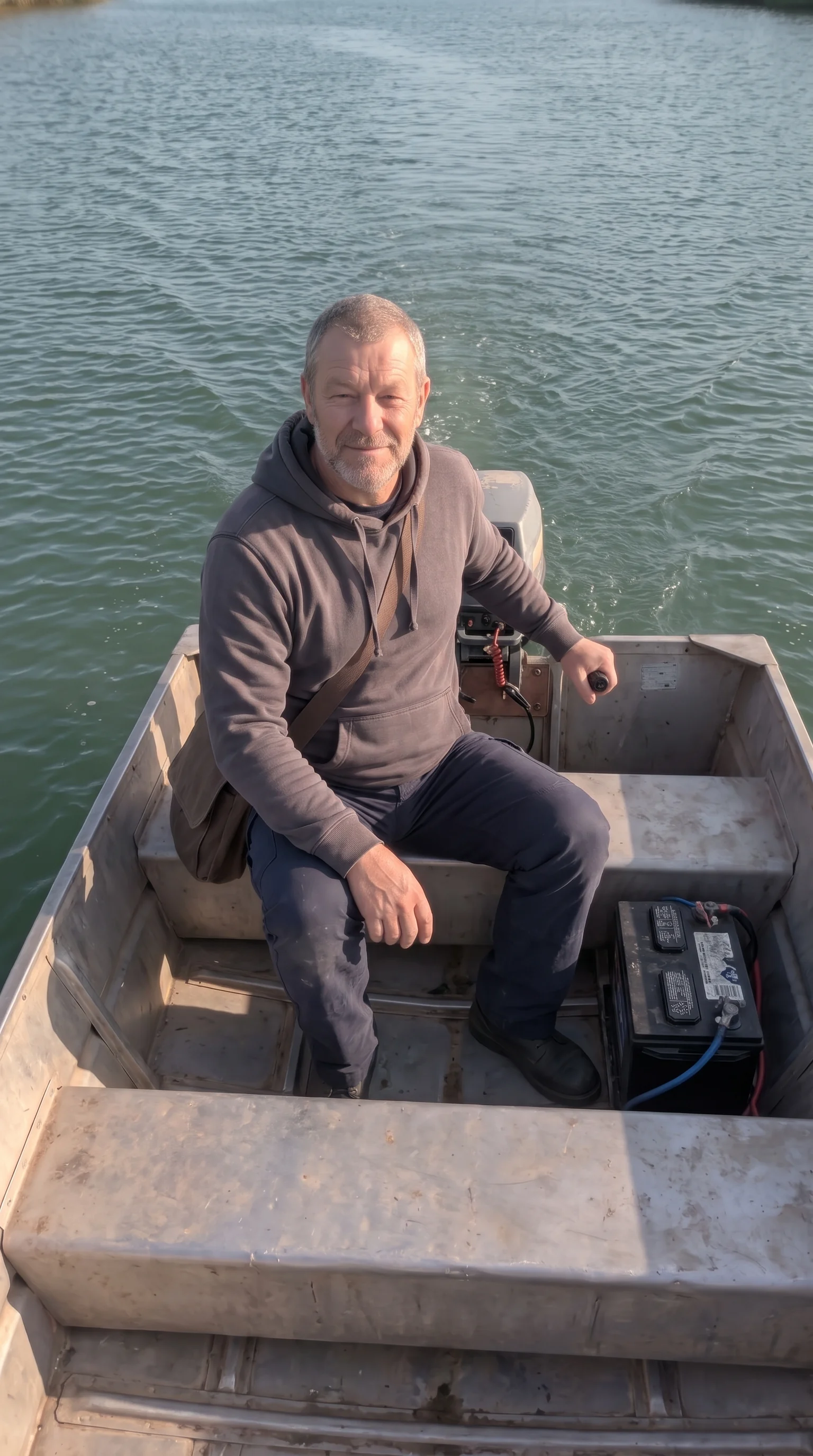
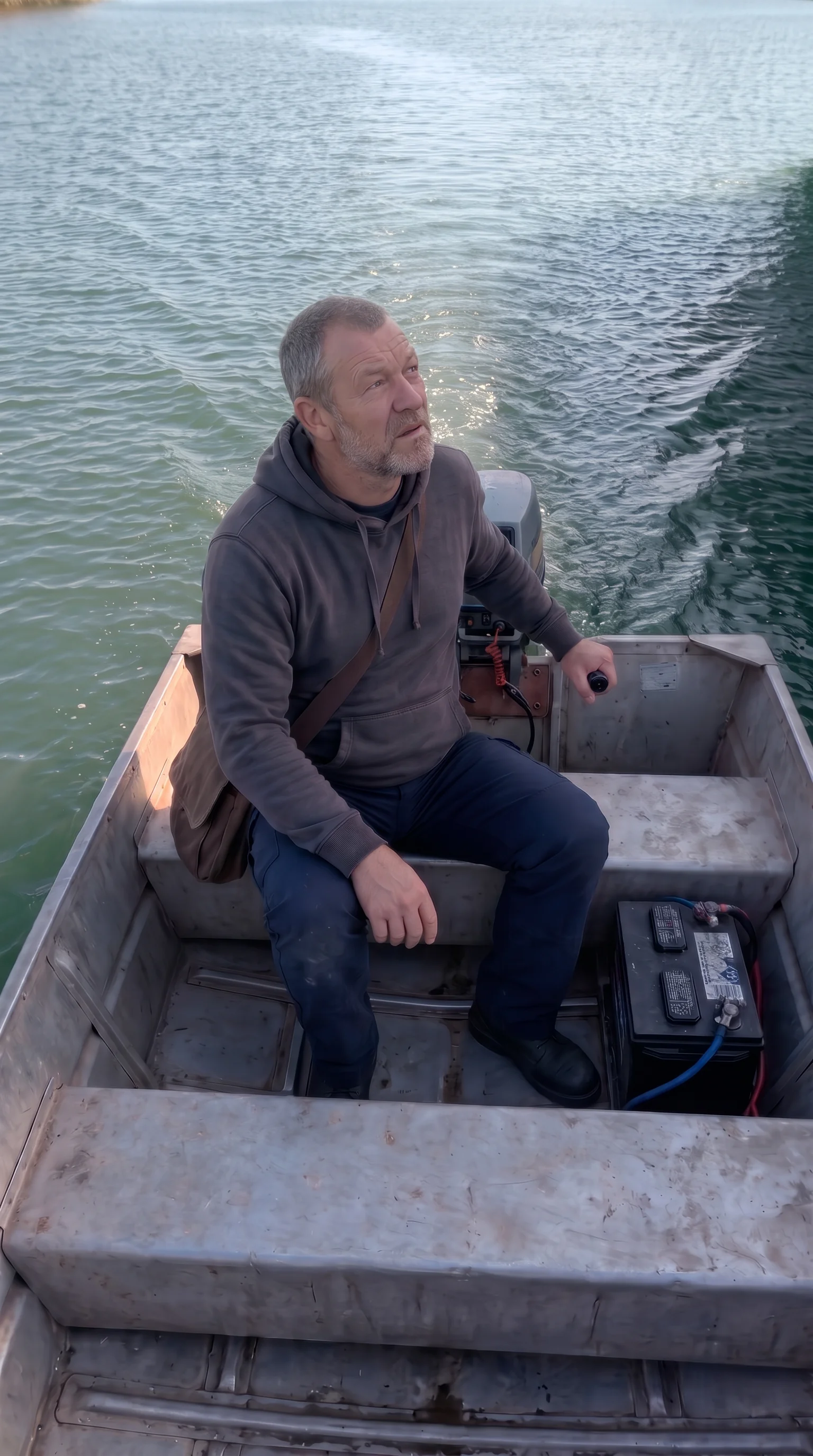
Driver: sunlit state — Driver seated and sunlit, holding tiller; preserve boat, clothing and bag.
-
Driver: shadow state — Same driver and boat in shadow, looking up; yacht remains out of frame.
-
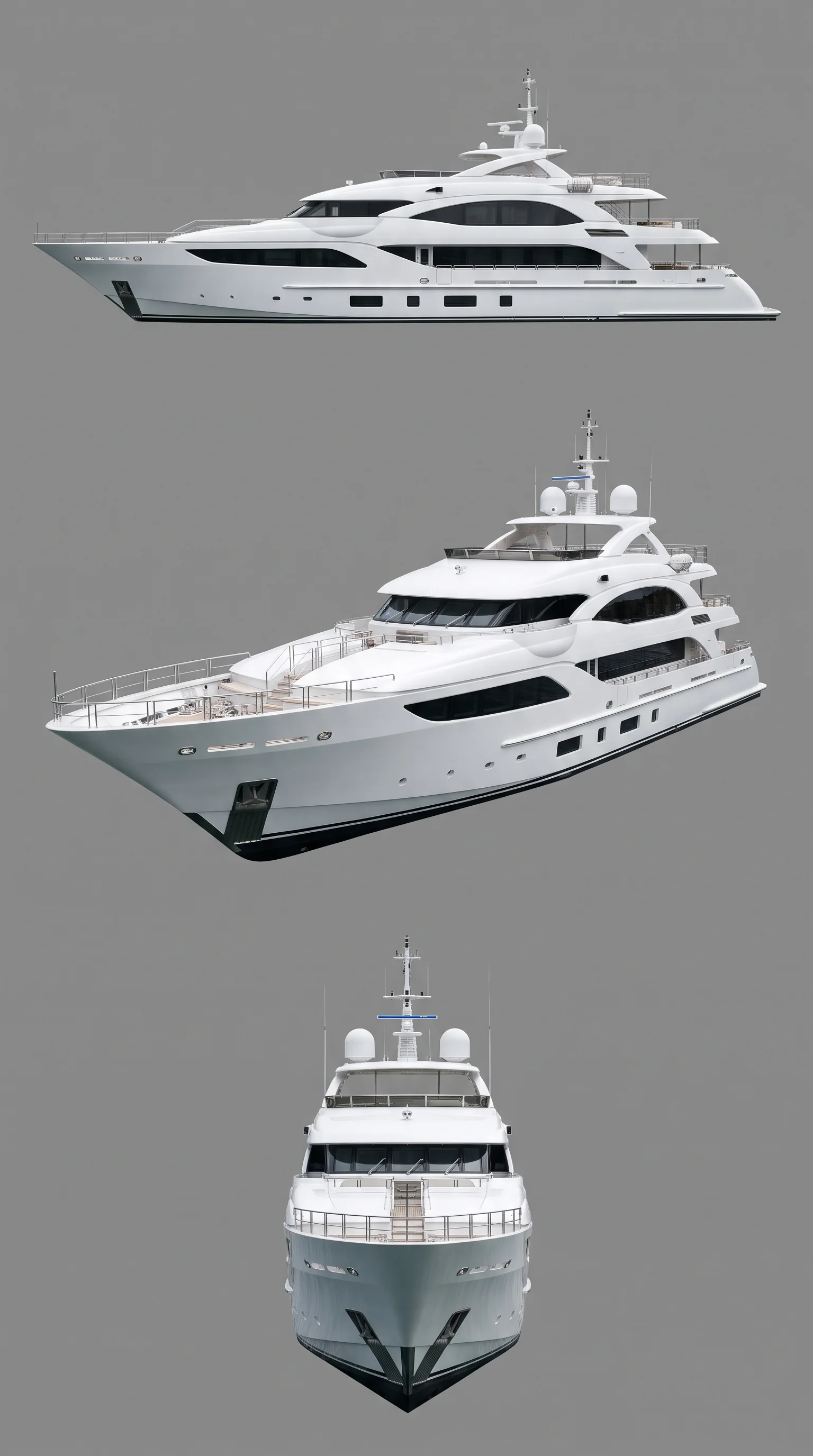
Yacht: design — White yacht structure and dark windows; ignore neutral background.
-
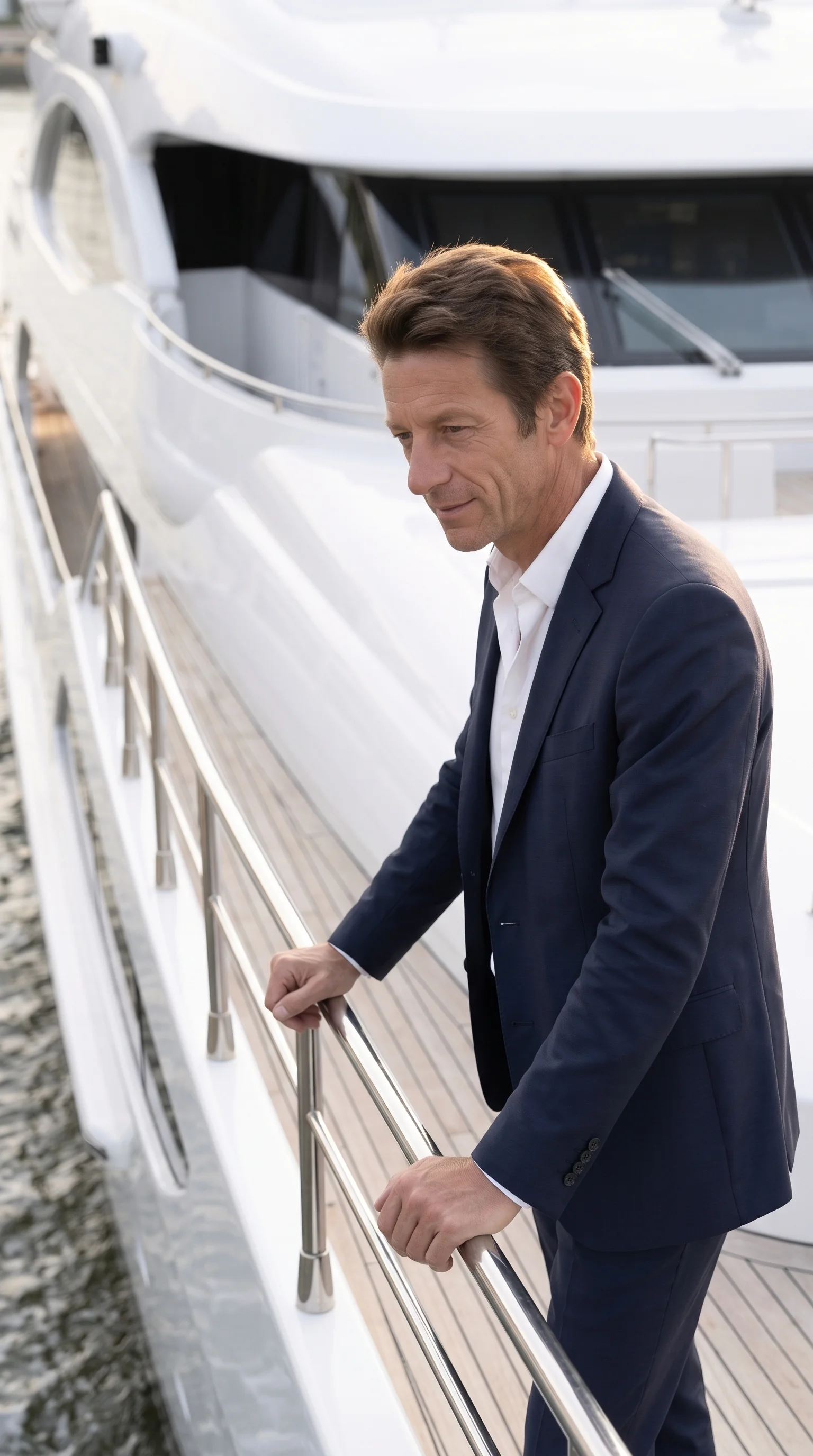
Yacht: rich man looks down — Suited man looking down from the yacht rail; preserve identity and eyeline.
-
Reader: costume and satchel — Reader costume and satchel: left-shoulder strap, bag at right hip.
-
Suited character: identity views — Suited man identity and navy suit. Ignore the grey backdrop and sheet layout.
An edited sequence, 12 seconds total, portrait 9:16. Direct cuts.
Photographic cast and materials. References guide the whole sequence.

REFERENCE ROLES
Image1: Driver seated and sunlit, holding tiller; preserve boat, clothing and bag.
Image2: Same driver and boat in shadow, looking up; yacht remains out of frame.
Image3: White yacht structure and dark windows; ignore neutral background.
Image4: Suited man looking down from the yacht rail; preserve identity and eyeline.
Image5: Reader costume and satchel: left-shoulder strap, bag at right hip.
Image6: Suited man identity and navy suit. Ignore the grey backdrop and sheet layout.

CONTINUITY
Preserve the same cast, clothes, props, location and light at every cut.
The reader carries the book in his right-hip satchel during tool work.
Sunny, dry conditions. Real-time actions; cuts can skip elapsed work.

Shot 1, 0.0–3.6 seconds:
Reader drives the small aluminium dinghy steadily forward on open water, seated on rear bench with left hand operating tiller. Dinghy stays physically supported by water, hull partly submerged and motor propeller underwater. Yacht remains entirely offscreen.
Camera: Elevated rear three-quarter view of the boat travelling forward. River water fills background; exclude shoreline and sky.
Sound: Small outboard engine and water wake.

Shot 2, 3.6–8.1 seconds:
Same reader continues driving. For the first two seconds of this view his face is sunlit and calm. A broad yacht shadow then travels across his face and hoodie, causing his expression to tighten. Shadow holds through the end; sunlit water beyond remains unchanged. Yacht remains completely outside frame.
Camera: Frontal medium-close view of the driver. Keep camera fixed; water background only. No cut within facial shadow transition.
Sound: Same outboard and water; deeper approaching yacht rumble grows beneath them.

Shot 3, 8.1–10.3 seconds:
Reveal enormous white yacht already alongside the tiny dinghy, both moving forward in parallel with a clear water gap. Same reader stays seated in the shaded dinghy. Both hulls remain in water; no airborne boat or exposed propeller.
Camera: Low view from behind the small boat with both vessels visible. Yacht hull and superstructure fill upper crop; no sky.
Sound: Low yacht motor, small outboard and displaced water.

Shot 4, 10.3–12.0 seconds:
Reveal same rich man planted behind forward yacht rail, looking down toward dinghy offscreen. Same massive white yacht travels steadily forward with bow wave. No extra people, passengers or other craft.
Camera: Frontal view independently ahead of yacht, not in the dinghy. Bow dominates frame, rich man visible against white bridge; crop upper frame below roofline to exclude sky.
Sound: Deep yacht engine and bow wash, continuous with preceding water ambience.

Sound belongs to the scene. No dialogue or independent score.
Keep the action literal. Verify support, contact, eyelines and light.
Before you generate
Check the attachment order, the model mode and the total duration. Read each action literally. Use only the references that serve the shot. Review the estimate in Studio before generating. Afterward, compare the actual result with your scene worksheet.